
Lærdal Vicarage, Tønjum
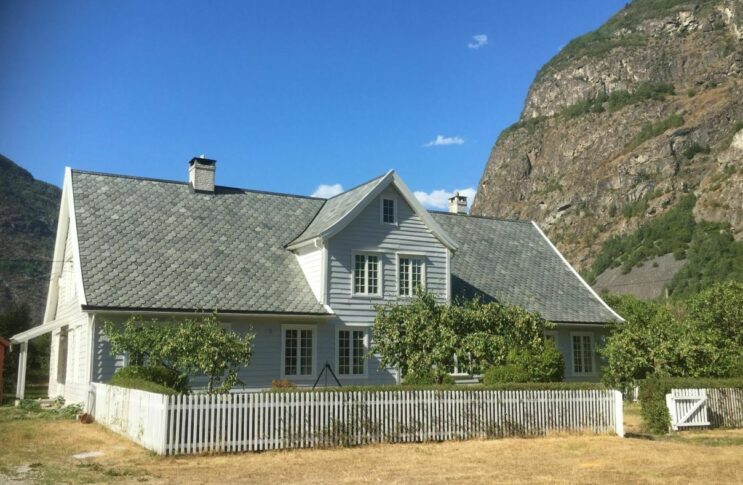
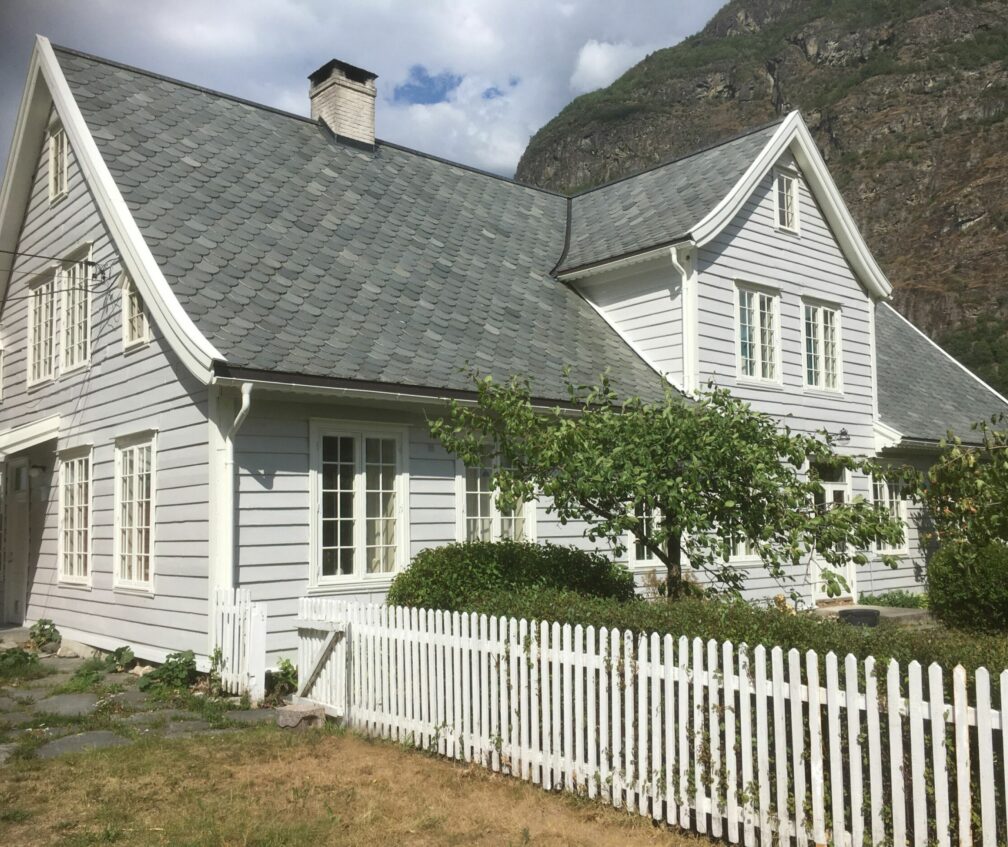
In ancient times, the vicarage was located on the north side of the Lærdal River, and the Tønjum farm probably became a vicarage as early as the beginning of the 17th century. The old King's Road ran along the west side of the vicarage garden, which in ancient times was an important hub and a meeting place for clergy.
The main building at the vicarage today was built around 1826 in the Rococo style. It was built under the direction of First Lieutenant Rumohr and parish priest Boyesen, using materials from the old vicarage at Øygarden (the substantial dimensions, with log widths of 11 inches, indicate this). The original floor plan included a hallway with bedrooms, a bishop's room and a guest room to the north, among other rooms. The roof, which originally had hipped gable ends, was altered to its present form in 1870. In 1902, the small-paned windows were changed to T-shaped windows, but during a major restoration in 2017, the small-paned windows were reinstated and the entire house was painted pearl grey, in accordance with instructions from the Directorate for Cultural Heritage. Electricity was installed in 1936, funded by public money. Several interior building details have been preserved.
As the centre of Lærdal developed into a small town, the vicarage became more isolated at Tønjum. Over the years, the vicarage residence has been upgraded to meet modern standards and underwent major rehabilitation in 2017.
Protected by the Directorate for Cultural Heritage
- Main building from 1826
- Borgstove from the 19th century, a low and narrow building located beside the turf-roofed storehouse in a row.
- Storehouse, turf-roofed, from the 19th century
- The woodshed beside the storehouse is a wooden building on raised supports.
- Cart shed
- The grain store stands outside the row of buildings and was erected in the 19th century.
- Farm building from the 19th century
Together, these buildings at the vicarage farmstead form a built environment of considerable antiquarian value. The protected outbuildings stand in a row at the vicarage farmstead.