
Gran Vicarage
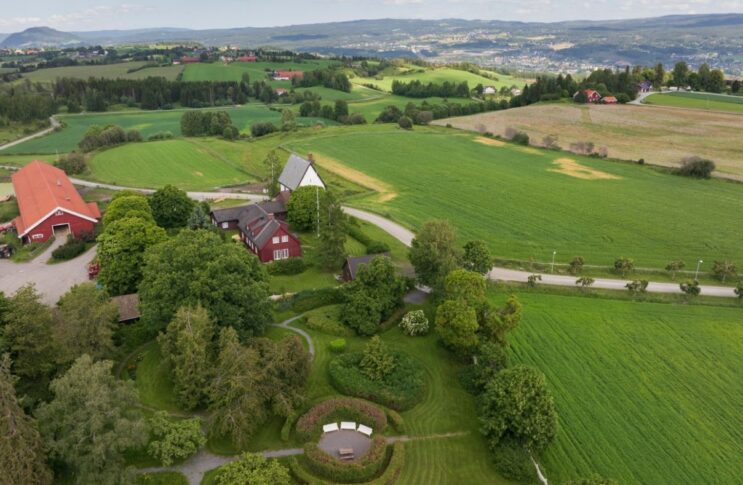
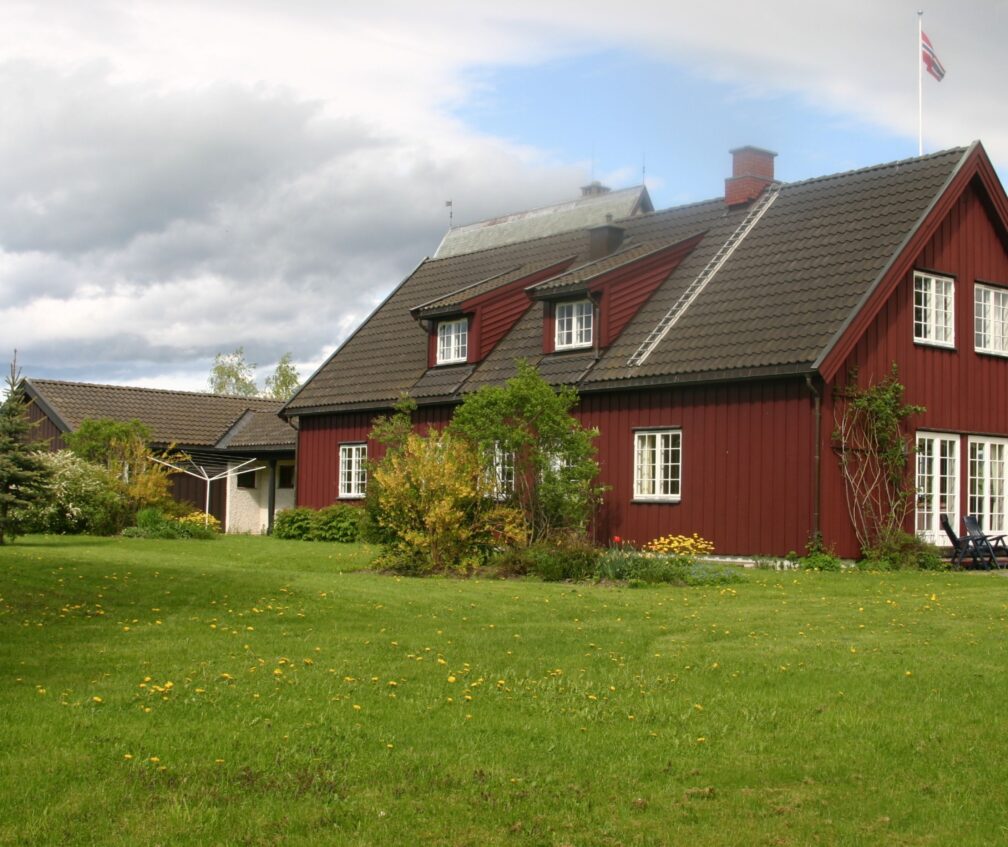
The vicarage was built in 1978 based on architect Inge Prestkvern’s drawings. The residence serves as the rural dean’s residence for Land Deanery, in Hadeland. The complex has a visual proximity to the sister churches at Granavollen, and is the third in a row of known vicarages situated on this very property.
The present vicarage has been connected to the renowned Stone House through a connecting passage. The Stone House stands on a leased plot belonging to the vicarage, but is operated as a foundation. The farm belonging to the vicarage has been separated and is operated as an independent unit.
The history of the vicarages at Gran
The location and history of the Stone House and the sister churches, a few hundred metres away, may indicate that they have long-standing ties to the vicarage property.
The oldest vicarage known to us was an elongated angular building consisting of four houses and two storeys. It was demolished between 1901 and 1902.
A new vicarage in the Swiss chalet style was built, but later burned down. Although the present vicarage dates from 1978 and does not have the same history in its walls, it stands on the same site and serves as a symbol and an important part of the continuity of vicarages and cultural history found throughout the area.
People and memories
Throughout the 17th and 18th centuries, it was said that only the vicarage at Stange could compare with the vicarage at Gran in size and prosperity. On the ground floor, the sitting rooms were named Grønstuene, Grastuene and Gulstuene; on the upper floor, the halls were named Hvitsalen, Storsalen and Rugsalen. The latter was so named because it had been used for storing grain.
Hieronymus Heyerdahl was a member of the Constituent Assembly at Eidsvoll and served as priest at Gran Vicarage between 1835 and 1845. He struggled to run the large vicarage with all its employees, and in addition, a chaplain had to be employed from his own official income. The long vicarage had several extensions and was an angular building when it was demolished in 1901–02. Today, the granary and the vicarage garden stand as memorials from this period.
The present 50-year-old vicarage, with the historic garden described by the Pilgrim’s Path through Hadeland, undoubtedly lies within an ancient setting. In this setting we find the Stone House and the medieval sister churches, the runestone in the churchyard, and the inn with Gregersstua. Together, these created hubs and meeting places. Granavollen (Granavøllen) was a changing point for horse-drawn transport and a meeting place for the local population, while the magnificent vicarage was a symbol of power and authority, and the king’s extended arm and presence in the village.