
Modum Parsonage, Heggen
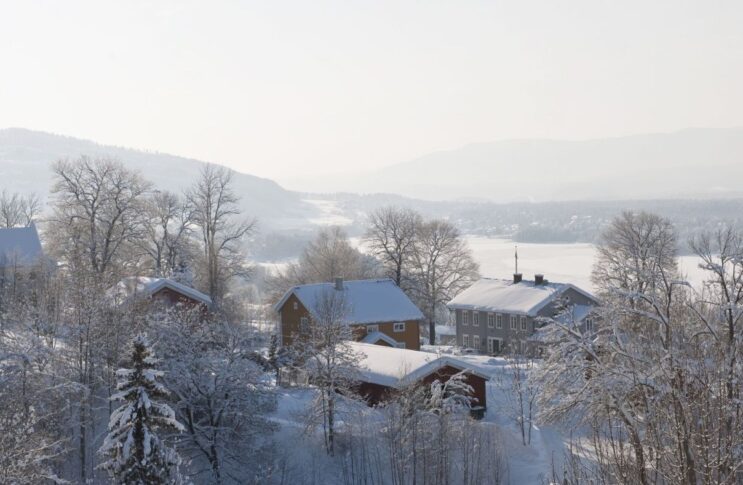
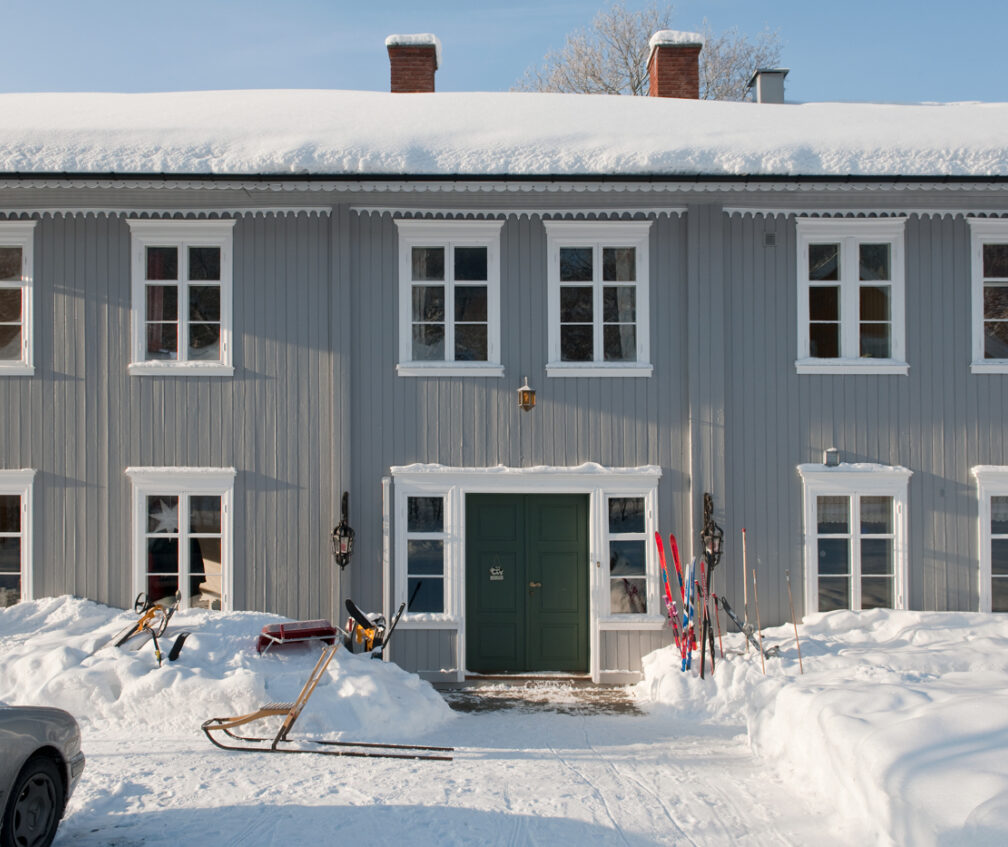
The parsonage, church and buildings form part of a unified protected complex that has constituted the ecclesiastical focal point of the village. The parsonage, church and churchyard have served as a centre since the Middle Ages. There has been a continuity of priests living at the parsonage from the Reformation until 2015, when the residence requirement was abolished.
The main building is a two-storey central-hall building made of log timber. It features elements of the Empire style, with a symmetrical arrangement of windows and the main entrance in the centre of the long wall. The projecting roof bears witness to the influence of the Swiss style, when the building was remodelled in 1862 and acquired its present form and appearance. The northern part of the building is believed to date from the early 19th century. The former farmhand's cottage is painted red and is the oldest and original parsonage residence.
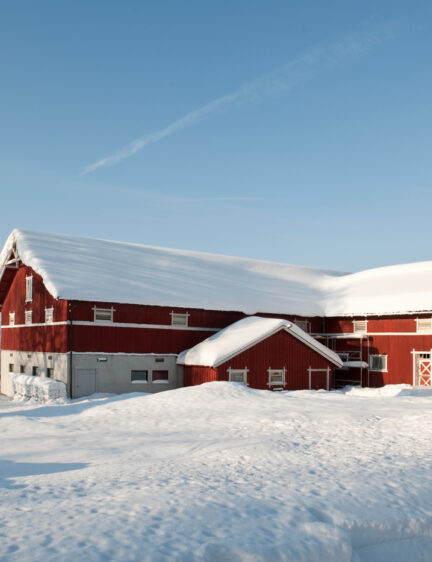
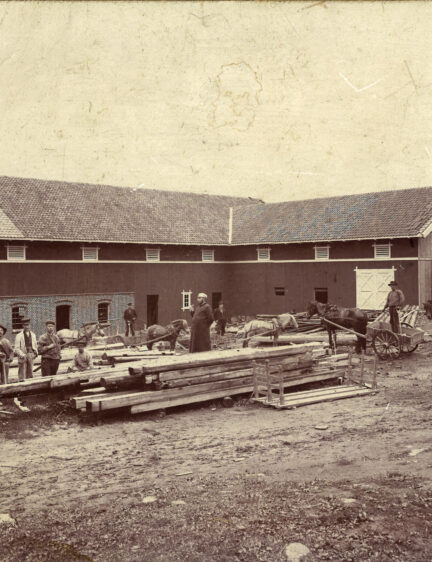
Protected
- A composite main building from the 19th century and 1862
- Tenant farmer's residence (farmhand's cottage), 1760s
Storehouse from the 18th century, with a projection on the second floor.
In very olden times, the villagers were responsible for maintaining three houses: the farmhand's cottage, the manor house (guest house for officials) and the stable.
People and memories
Christian Teilmann (1743–1821) was a fruit-growing priest and Enlightenment priest at Modum Parsonage. He became an important innovator and ran a plant nursery on the farm. In 1786, it is reported that he had a plantation with 10,000 apple trees, and he conducted "research" in an area where no one had done so before. In Denmark, he had learned how apple trees could be mass-produced through sowing and grafting. He believed that all pests on the apple trees were more damaging to their growth than frost and cold.
During the 1801 census, 64 people lived at the parsonage. In addition to the priest's own family, there were three female servants and three male servants at the parsonage, as well as the tenant farmer's family and several crofter families. In 1910, the parsonage had less land, but it was large enough to feed 12 cows and three horses.