
Rakkestad Vicarage
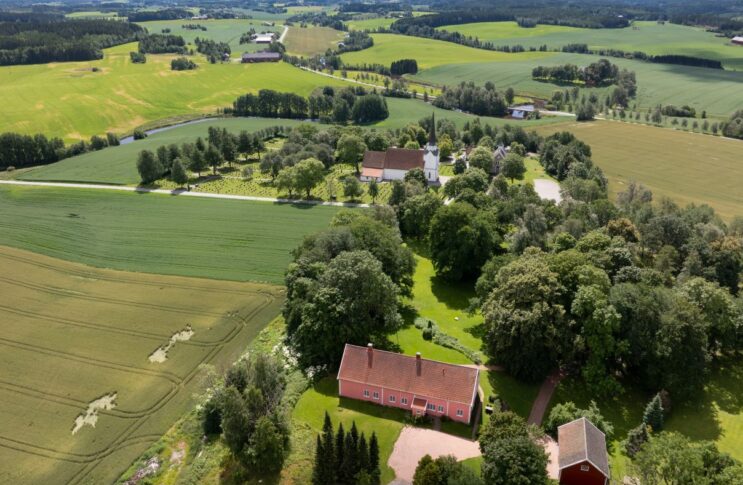
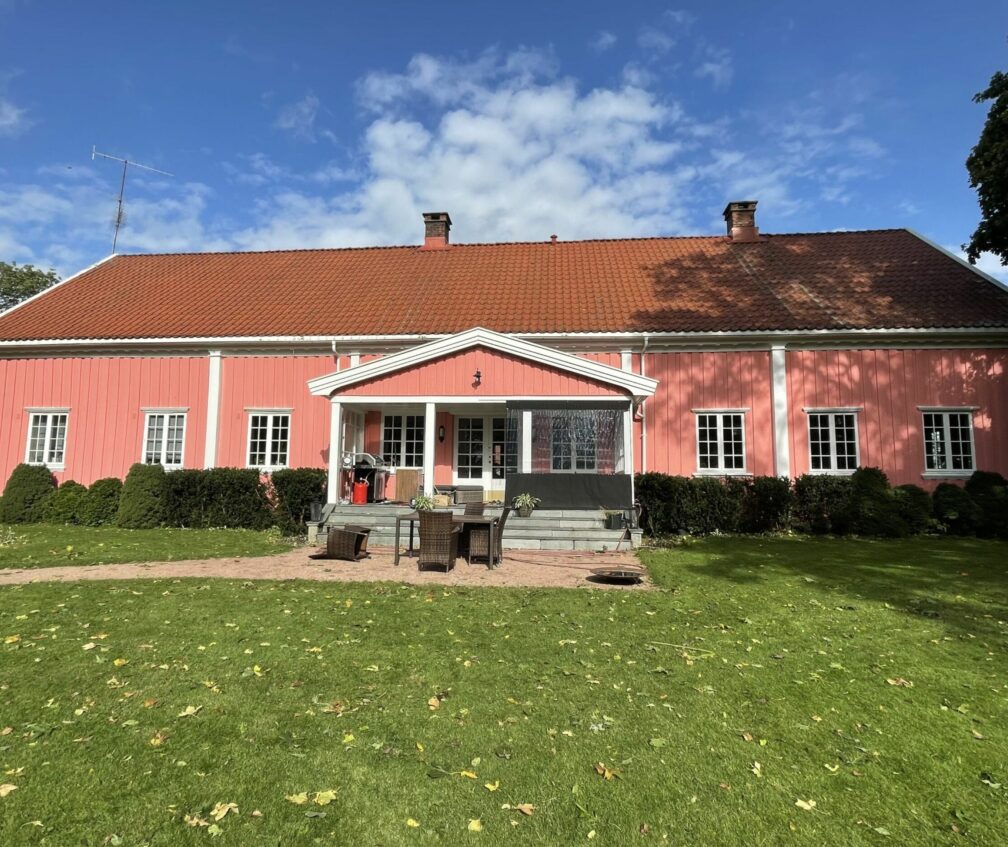
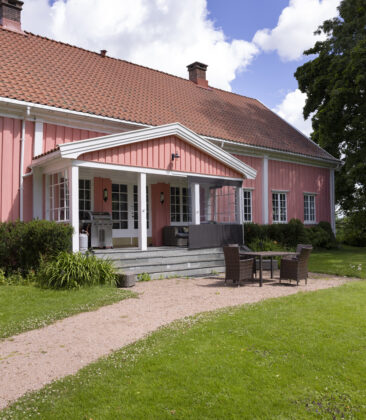
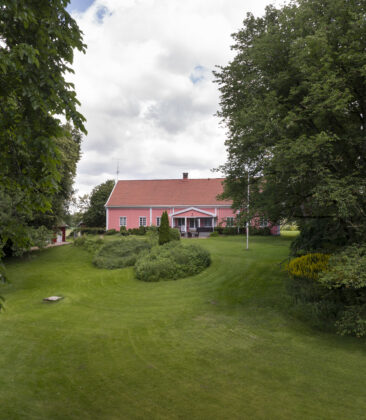
Rakkestad Vicarage is located in Inner Østfold, on a majestic hill, and is an important cultural heritage property because of its history connected to 1814 and its location by the church site and the route toward Sweden. The log-built main building was erected in 1797. The Danish king Christian Frederik visited the vicarage in 1814. On a later occasion, the farm was visited by Crown Prince Karl Johan. In 1838, the upper floor was removed, and since then the building has had one and a half floors. A large garden borders the road where the medieval church is located.
The building was restored in 1922–23 and has subsequently been upgraded before changes of parish priest and when rented out, increasing the standard of the residence. The estate’s five buildings are an important part of the church’s immediate surroundings, and the property has long traditions dating back to before the Reformation.
The farm manager’s residence was extensively upgraded in 2012, and in 2022–23 the entire vicarage underwent major rehabilitation.
With the extensive agricultural land connected to the farm, the vicarage is Allstad’s largest agricultural property in Østfold.
People and memories
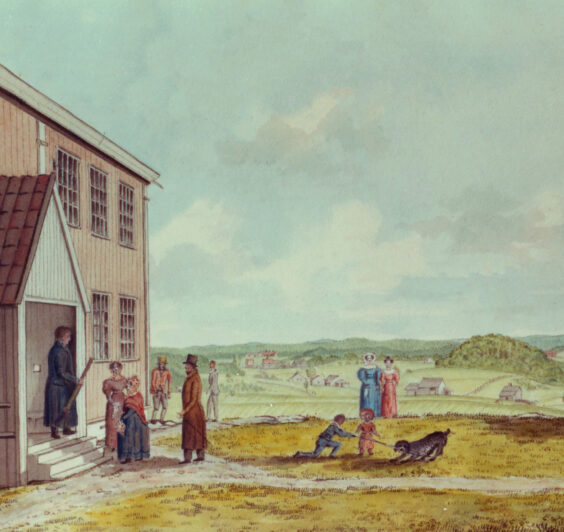
When the Reverend Thorkild Aschehoug retired in 1834, he stated that he had served as the postmaster at the vicarage for 40 years, without any form of compensation. After the middle of the 19th century, this old practice of delivering and collecting mail at the vicarage came to an end. In very old times, the vicarage had 17 tenant farms, and responsibility for maintenance was divided. The priest was responsible for maintaining the western part, while the local people took responsibility for the eastern part of the building. Throughout history, the vicarage has been of great importance as the village’s representative venue for small and large meetings. The vicarage has accommodated bishops on visitations and kings passing through.
Protected by the Directorate for Cultural Heritage in 1990
- Main building from 1797
- A jettied storehouse from 1900
- The exterior of the farm building and woodshed from 1916 are protected.