
Solum Parsonage
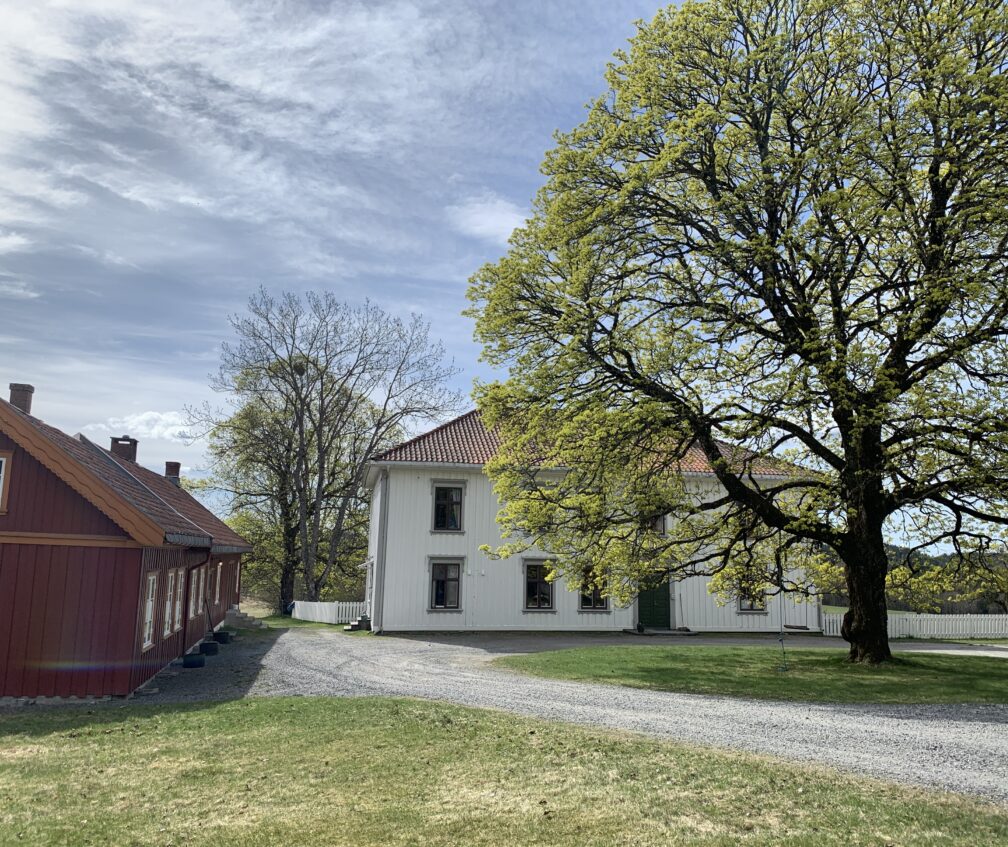
Solum Parsonage is located by Klovholt and has Solum Church as its nearest neighbour. The main building has a core dating from the 18th century, but bears the mark of alterations made in the 19th century. Several older architectural details have been preserved, such as thresholds and trim. The house acquired its present appearance after an alteration in 1842, when the second floor was reportedly built. The house has taller windows on the second floor, and the placement of the windows does not correspond to that on the first floor. The long façade facing the courtyard has a classical entrance portal with a fanlight.
In 1991, the Directorate for Cultural Heritage protected three buildings on the parsonage grounds;
- Main house with a building core dating from the 18th century
- Farm manager’s residence, 19th century
- Garden pavilion (playhouse), undated
In the summer of 2018, the main house of the parsonage was painted white, with an olive-green front door and grey-green trim around the windows. The farm manager’s residence was also painted. Since the parsonage is protected and its use has been changed, the work was carried out in cooperation with the county conservator.
A new era for the parsonage
In 2023, Solum Parsonage began operating as a school farm project, based on the model of Abildsø Farm in Oslo, which over the course of 15 years has gained valuable experience in how “school lessons” can be conducted in practical and educational ways.
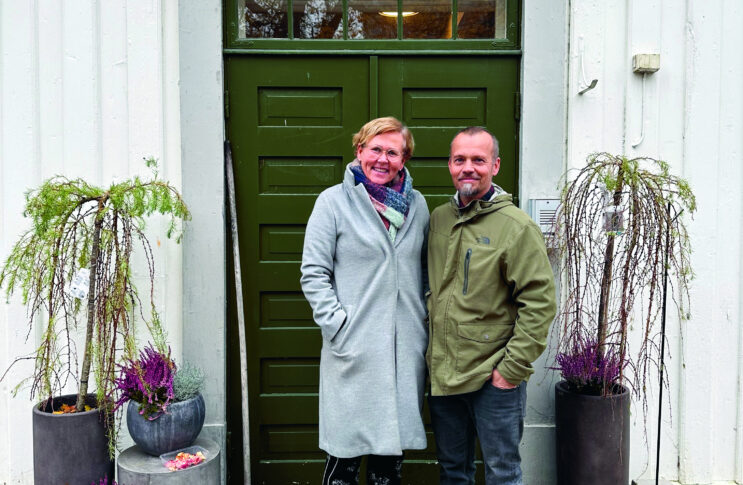
The school farm project at Solum aims to offer unmotivated pupils a day in a different setting and with different tasks. Catrine and Morgan Sørensen are the operator couple who live at the parsonage, while primary school pupils come to Solum one day a week.
Porsgrunn Municipality is responsible for the financial and educational aspects and pays the employees’ salaries. The practical and educational programme is carried out in cooperation with the Abildsø model, and the operator couple are paid by the school farm foundation itself.
People and memories
The local history book for Solum tells us that in 1865, “there was no less activity at the parsonage—slaughtering, brewing, baking, spinning, weaving and sewing, and raising the growing youth.” The parsonage has adopted a modern operating model that fulfils a social responsibility, just as the parish priest did in his time.