
Steigen Vicarage
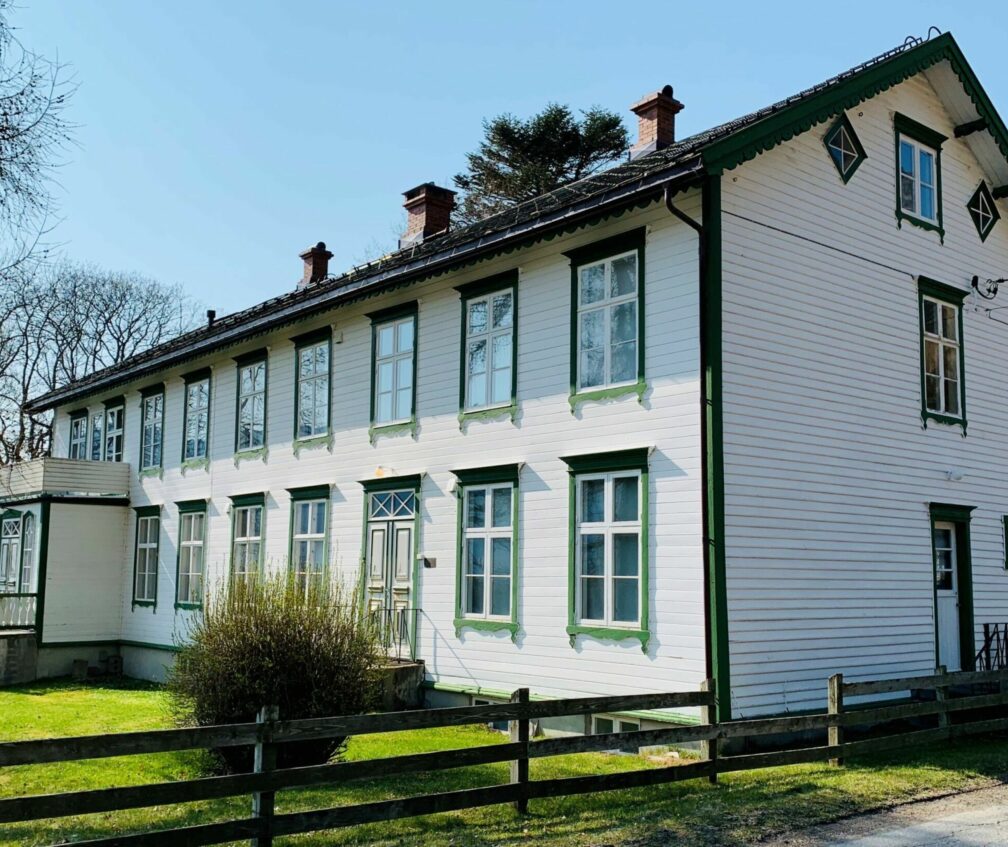
The vicarage is located at Laskestad in Steigen Municipality, approximately two kilometres from Steigen Church. The monumental main building was erected around 1884 by parish priest Wisløff, who commissioned its construction. He also established a kitchen garden that became historically significant for the spread of garden culture and agriculture in Northern Norway. In 2023, Steigen Rural Museum received the Garden Society’s Garden Culture Award for its work preserving the old garden.
The vicarage consists of two listed buildings: the main house and a storehouse. The barn at Laskestad, built in 1869, was one of the first unit barns to be constructed in the country. The principle was that an outbuilding should be constructed rationally, and that keeping all kinds of livestock under one roof was beneficial. This barn was later demolished and replaced by a newer one. The storehouse, dating from the 1880s, is located east of the courtyard. It is painted red and has a simple bell tower.


The unique garden at Steigen and on Engeløya
Pastor Carl Richard Wisløff and his wife Amalie devoted considerable time to the property during the 1870s and 1880s. They collaborated with Professor and botanist Fredrik Christian Schubeler in Oslo. He sent seeds and plants to Steigen Vicarage, as he did to many other farms, for testing in order to assess their survival rates and understand the plants’ climate requirements. At the vicarage, a larger marsh area had been drained and enclosed to serve specifically as an experimental field for this purpose. Steigen, or Laskestad as it was originally called, became a model farm in the district because of the utility and gardening work of these pioneers.
Sparebankstiftelsen has selected Steigen Vicarage as a recipient of funding from Schubeler’s network (2022), which has the Kvann website. Allstad has made areas at Steigen Vicarage available for a larger project investigating the survival of shrubs and trees in a dedicated experimental field.