
Verdal Vicarage
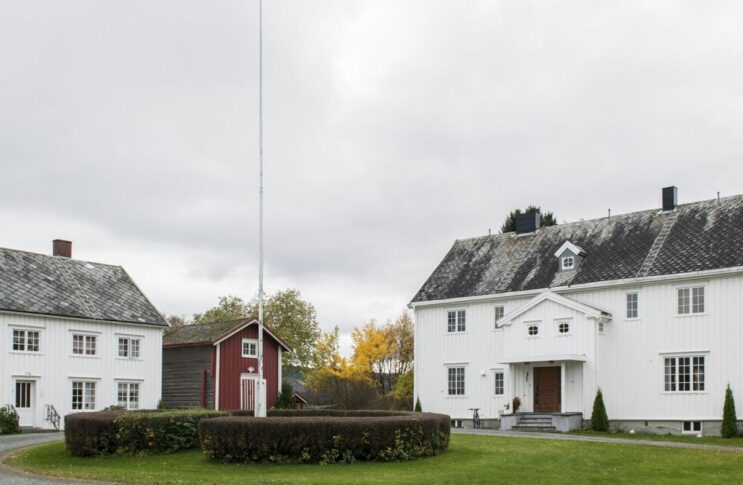
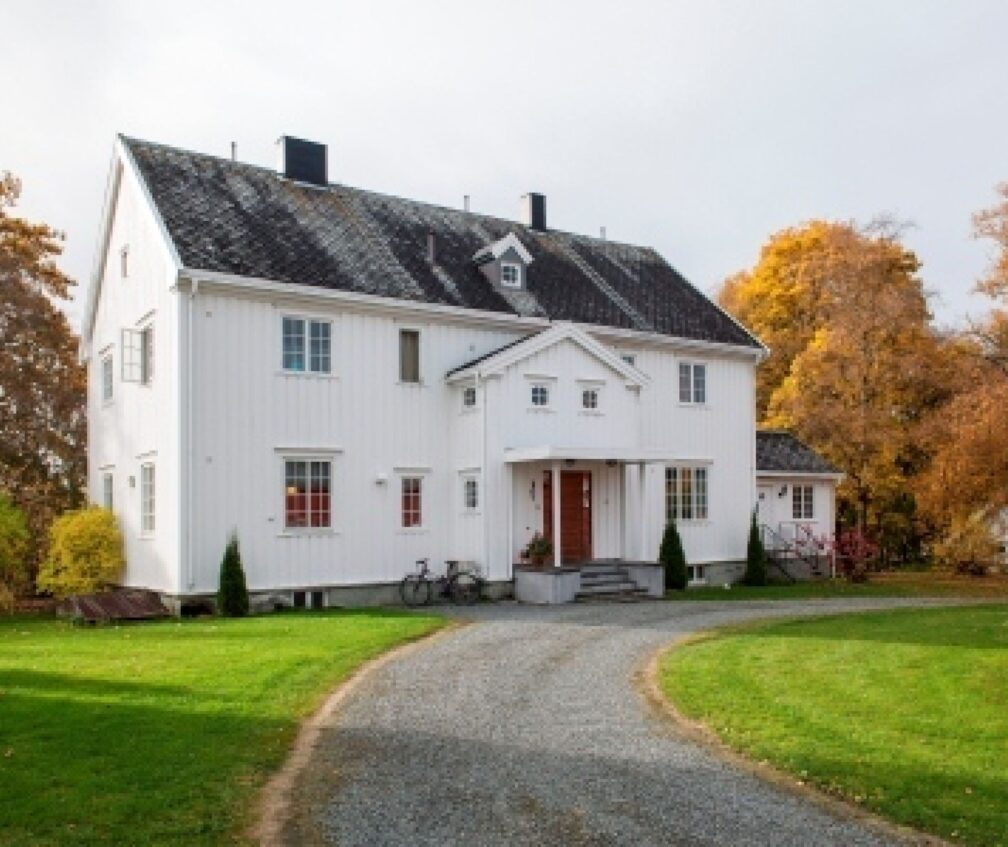
Verdal Vicarage is also called Stiklestad Vicarage because it is located near the village of Stiklestad. The vicarage was designed by Lars Solberg and built in the summer of 1921. The former vicarage was a Trønder farmhouse that was dismantled and moved to the Folk Museum at Bygdøy. The old tenant farmer’s residence and outbuildings in the yard associated with this old Trønder farmhouse were left standing. Today, the buildings give the yard a unified appearance. In addition to the main building, the vicarage has a tenant farmer’s residence, barn and storehouse, forming a horseshoe-shaped yard.
The vicarage still bears the name Verdal Vicarage, but locally it is often called Stiklestad Vicarage.
People and memories
The old vicarage was located in Verdal, on the Auglen farm, but during the night of 19 May 1893, a major landslide occurred, carrying away both cultivated and uncultivated land, but not the main building. The vicarage became a central place where the injured were cared for, and the vicar’s wife, 55-year-old Maren Elisabeth Hansen, organised the relief work. The vicarage itself became unsuitable and uninhabitable, as it was left standing on a terrace. The roads to and from it were gone, and no servants would seek employment there, the vicar wrote in a letter to the Ministry of Church Affairs. He had long felt that the vicarage was too remote, and the landslide had now made the situation even worse. The overall circumstances led the Ministry of Church Affairs to decide to sell the vicarage.
The landslide was described as a major national tragedy in which 116 people died.
In 1896, the Corporal’s Farm, which stood on safe ground one to two kilometres from Stiklestad Medieval Church, was purchased as a new vicarage, and it served as a vicarage until 1921. In 1921, this typical Trønder farmhouse was dismantled and donated free of charge to the Norwegian Folk Museum at Bygdøy, and a couple of years later it was reconstructed at the open-air museum. At the Folk Museum, the farmhouse is the museum’s example of a Trønder farmhouse and represents the building tradition of Trøndelag.