Strong Forces in Small-Scale Hydropower
The world needs ever more clean, renewable energy. In Norway, we have abundant access to the best source of them all: water. Hydropower is a renewable and clean energy source that neither emits greenhouse gases nor pollutes the natural environment. OVF owns land throughout the country and established Clemens Kraft in 2006 to utilize the water rights found on some of its properties. In recent years, Clemens Kraft has also expanded its operations to include development in cooperation with other landowners, making an important contribution to OVF’s work on social, environmental and economic sustainability.
Today, Clemens Kraft prioritizes projects with normal annual production exceeding approximately 10 GWh. At full production, these power plants cover the energy needs of around 500 households. Clemens Kraft’s original strategy was to build an overall hydropower portfolio of at least 600 GWh by 2021. The result is a realized production volume that will reach 700 GWh by the end of this year. This gives a total production equivalent to the electricity consumption of approximately 35,000 households, corresponding to a medium-sized Norwegian city.
New Managing Director
In August 2021, Knud Hans Nørve took over as the new managing director of Clemens Kraft. He has extensive experience from the energy sector, including as a partner at Rystad Energy and most recently as managing director of the gas infrastructure company Infragas Norge. Nørve describes an exciting growth journey for Clemens Kraft, from what began as a small start-up company to becoming one of Norway’s largest players in small-scale hydropower.
– Clemens Kraft has experienced strong growth in recent years, largely because OVF has been a solid and long-term owner. Through acquisitions of smaller hydropower companies with a strong production history, the establishment of an organization with unique expertise, and the development and commercialization of power plants, Clemens Kraft has built a diverse portfolio of profitable small-scale hydropower plants, says Nørve.

Creating Local Value
Clemens Kraft’s power plants are located throughout the country, with a concentration in Western Norway and Trøndelag. The local landowners who hold the water rights are the most important partners. The water rights, which are leased under long-term contracts with reversion rights, provide the landowners with annual rent normally determined on the basis of the power plant’s turnover. As a rule, the landowners are also involved in supervisory duties. In addition, a large proportion of the products and services purchased during the development phase come from local suppliers, while property tax accrues to the municipality during the operational phase.
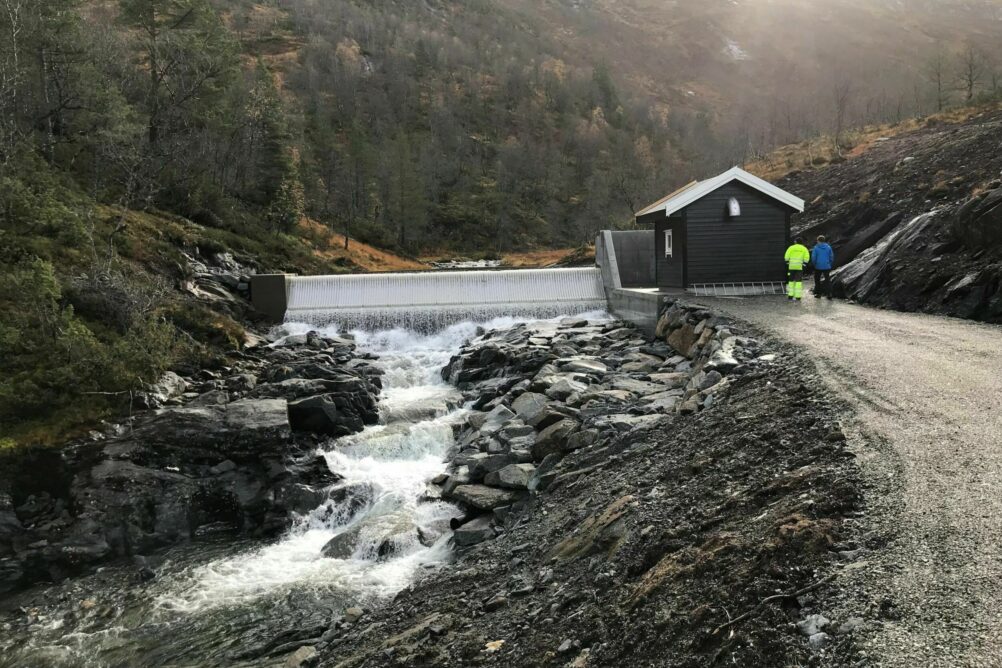
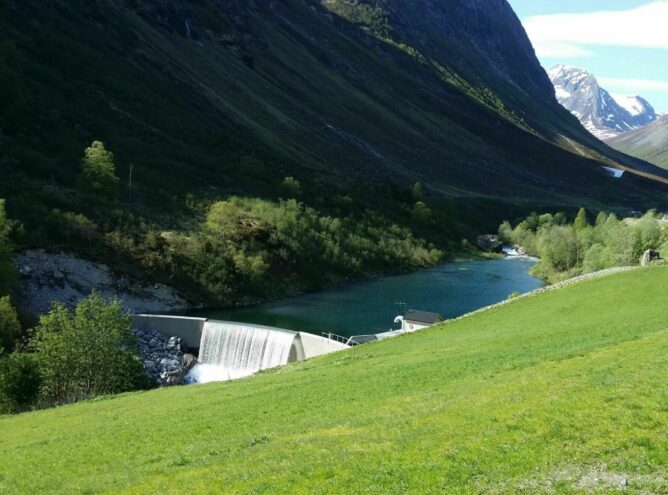
– In addition to creating jobs and contributing to development in rural areas, small-scale hydropower plants involve moderate interventions in nature compared with other energy sources, such as wind power. Put simply, one can say that it consists of an intake building with a small dam upstream in the river. We then borrow the water for a few hundred meters, where it passes through a power plant about the size of a mountain cabin, before the water is released back into the watercourse, explains Nørve.
– Both we and our partners assess the balance between the interventions made in nature and the value created by those interventions. If the figure is negative, the river cannot be developed. Our projects must always be sustainable – economically, environmentally and for the society in which we operate.
Knud Hans Nørve, Managing Director of Clemens Kraft
Foreign Co-owner
Clemens Kraft was originally a wholly owned subsidiary of the Church Endowment Fund, but in 2017 OVF sold 49.9 percent of the shares to the pension fund of Swiss Coop’s insurance and pension company, CPV/CAP. The investment in Clemens Kraft is the pension fund’s first investment in hydropower.
– As the need for capital increased, CPV joined the ownership group. They helped establish a further development path for Clemens Kraft, and the growth plan has been implemented since 2017. We had our childhood with a patient OVF and have subsequently gone through a hectic adolescence with OVF and CPV as good and professional owners. As with all young people, there has been a great deal of learning and development in recent years. To complete the metaphor, I would say that we have now reached the age of majority – we are ready to stand on our own financial feet as a company, but it is always reassuring and sensible to be able to seek support and advice from one’s parents even after becoming an adult, says Nørve.
From Start-up to National Player
In the fifteen years since Clemens Kraft was established, the company has developed from being a typical start-up to becoming a significant national player in small-scale hydropower. The formula for success is professionalization, efficiency improvements and portfolio management. The company is now focusing on sound operations and profitable development after 2021.
– Renewable energy is undoubtedly the future, and small-scale hydropower makes an important contribution to achieving the climate targets of the Paris Agreement. Demand for renewable power is increasing significantly as a result of the decarbonization of the energy sector, creating major opportunities for the small-scale hydropower sector in Norway, Nørve concludes.