
Community builder for a new era
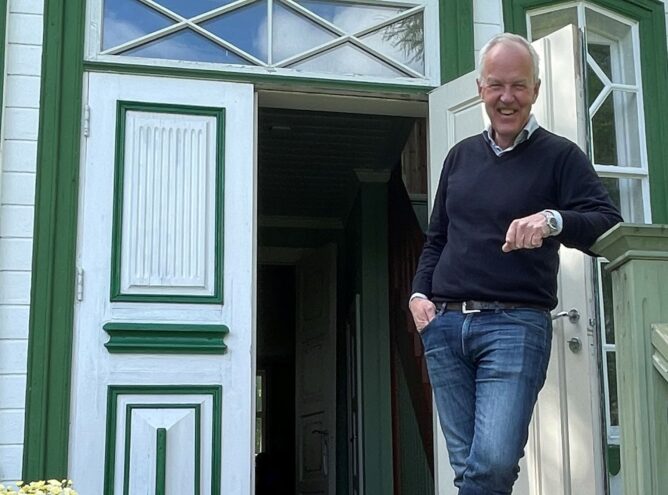
It was the houses and properties associated with the vicarages that formed the basis for the establishment of the Foundation for the Advancement of Knowledge of the Church, which was enshrined in the Constitution at Eidsvoll in 1814 and formally established by law in 1821. Throughout OVF’s 200-year history, the Foundation has managed the properties, and the returns have provided funds for the Church of Norway until 2022.
Following the separation of church and state in 2017, the Storting decided in 2020 to divide the Foundation between the state and the church, with the church taking over, free of charge, bishops’ and parsonage residences, as well as plots closely associated with churches throughout the country. The separation of these properties is ongoing, and OVF will continue to manage the values remaining in OVF.
The Foundation has been, and is, an enabler through its role as a landowner. Historically, OVF has been a community builder, and that is something we will continue to be.
— Ole-Wilhelm Meyer, Director of OVF
Value for the community
In addition to the vicarages, OVF also works on developing other properties in its portfolio. Many properties are leased for commercial buildings, residential properties and holiday homes, and a number of other properties are being considered for development in cooperation with municipalities, businesses and other stakeholders throughout the country, Ole-Wilhelm Meyer explains.
– Our two subsidiaries, Clemens Eiendom and Clemens kraft, work on this and have a number of excellent projects under development. The subsidiary Clemens Kraft works on developing environmentally friendly energy supplies through small-scale hydropower plants, while Clemens Eiendom works on residential and commercial building projects, including under the “Smart neighborhoods” concept. These and other parts of the Foundation’s projects and operations, including agriculture and forestry, as well as the operation and maintenance of the Foundation’s cultural properties, create a range of jobs and activity in rural Norway, concludes Ole-Wilhelm Meyer.