
Floral splendor at vicarages
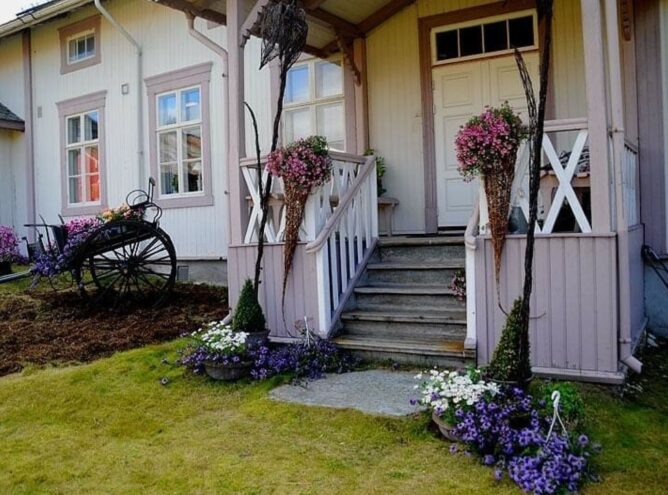
In former times, the Vicarage Garden at Alvdal was the most photographed garden in Nord-Østerdal.
- My dream is to recreate a beautiful garden for the enjoyment of young and old alike, creating a sensory garden where people can see, smell and taste, says Tirill Langleite, the vicar’s wife at Alvdal Vicarage.

- We do not need new «miracles», but eyes that see. We are often so preoccupied with organizing tomorrow that we forget today and the flowers growing along the roadside that bring us joy. I dream of a garden that can help teach children to see the beauty that actually exists right in front of our noses. To learn to respect and care for what sprouts and grows around us.
- A gardener never gives up hope. The foliage has fallen, the soil is bare, the flowers are gone—only the stems remain. But through long experience, the gardener has learned patience and hope.
Spring lies just beneath the frozen ground. The garden fills the soul with hope.
Beneath the snow, snowdrops will soon emerge again after a long and harsh winter, and we can get started on the vicarage garden, the vicar’s wife says with a smile. The gift from Sparebankstiftelsen DNB is most welcome and gives her the opportunity to realize her garden dream.
Schübelers gardens is part of the KVANN association—Knowledge and Conservation of Useful Plants in Norway. Chair of the board Merete Furuberg thinks this is fantastic news.
- The support will mean a great deal to all the old gardens, the local communities and the people active there. We now have new opportunities to care for historic gardens throughout the country and engage children and young people—it is important to show them where food comes from and how it is grown, she adds.
The network
The Schübelers gardens network was started in 2021 and has in a short time gained more than 40 members throughout the country. Many of them are connected to museums or old vicarages, but private gardens with a history are also included. The well-established gardens in the network help the new ones with advice and practical assistance in preserving both the plants and the stories.
- We proceed carefully, beginning by registering old plants and garden features, Furuberg explains. Next, a garden plan is prepared, followed later by a maintenance plan. Many of the old vicarage gardens have been important to their local communities, but have fallen out of active use in recent years. Now they will be given new life based on their own history, with local forces actively involved.
Fredrik Christian Schübeler (1815–1892) was a botanist and professor at the University of Christiania, and director of the Botanical Garden at Tøyen. He organized a network of experimental gardens throughout the country to test new useful plants. Unlike most professors, Schübeler believed that experimental cultivation of economically important plants was the botanical garden’s most important role.
More information: Schübelers gardens – K V A N N
KVANN
The KVANN association—Knowledge and Conservation of Useful Plants in Norway—was founded in 2016 and is a national organization dedicated to preserving plant diversity. KVANN works to preserve old Norwegian useful plants, while also testing new and exciting crops in different parts of the country, from the coast to the mountains and from Lindesnes to the North Cape.
- This can better prepare us to meet climate change. Climate-friendly and local food production is important in terms of strengthening food preparedness, says Merete Furuberg.
KVANN tests new perennial vegetables and forest garden plants, especially in the mountains and Northern Norway, where there is great potential for increased vegetable production. One of the initiatives is the establishment of a network of demonstration and experimental gardens throughout the country.
More information about KVANN: K V A N N – Norwegian Seed Savers