
The History of Allstad

Deep roots
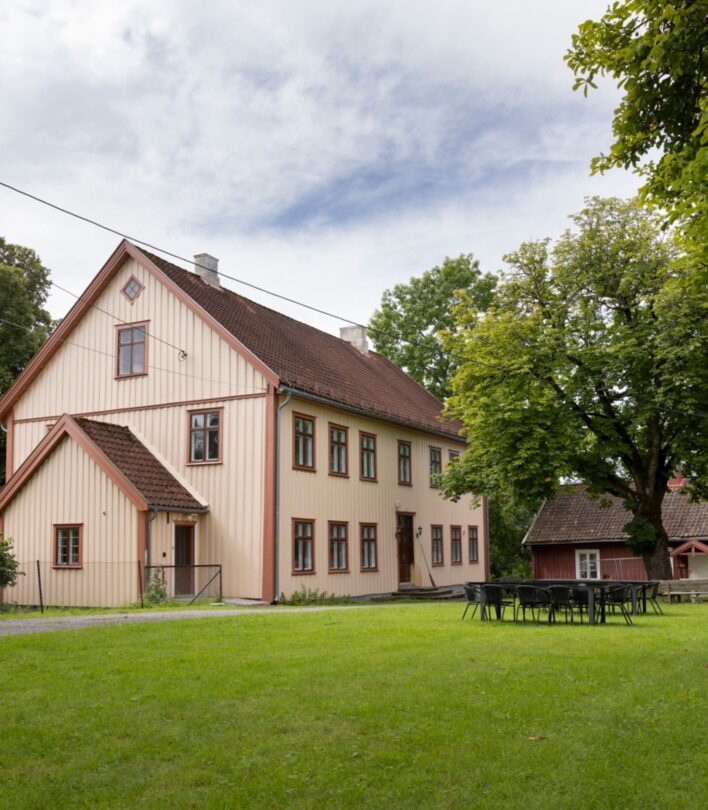
The history goes back to the Middle Ages and originated in what was known as the vicarage estate, which was intended to provide a source of income for the clergy. The vicarage estate was built up over the course of 500 years. As early as the fifteenth century, the estate was considered an independent legal entity, under which the priest could act independently in business dealings. When absolute monarchy was introduced in 1660, priests became royal civil servants and represented the state and the king in the local community.
This property estate from the Catholic era represented considerable value and accounted for 10–15 per cent of all real estate at the beginning of the nineteenth century. Vicarages, leased farms, dower houses, and agricultural and forest properties were known as the “Beneficed Estate”. This remained in the possession of the priest even when the king confiscated monasteries and episcopal and church property during the Reformation.
Eidsvoll 1814
At Eidsvoll in 1814, there were many critical voices concerning the priests’ exploitation of the ancient vicarage estate—not least the leased farms, of which there were 8,000–9,000. When the lease periods expired, these should be sold and the proceeds placed in a fund, the returns from which should be earmarked for the church and education, some believed. The Enlightenment theologian and Trøndelag provost Midelfart was active in matters concerning schools and the church and believed that one should disregard the vicarage estate’s Catholic origins:
It is not through ceremonies or through the prayers of the clergy that the soul is saved; only through the dissemination of morality and true enlightenment, and this is advanced through schools and universities, which cannot exist without money. True enlightenment enlivens and promotes all that is good; freedom itself is won through it.
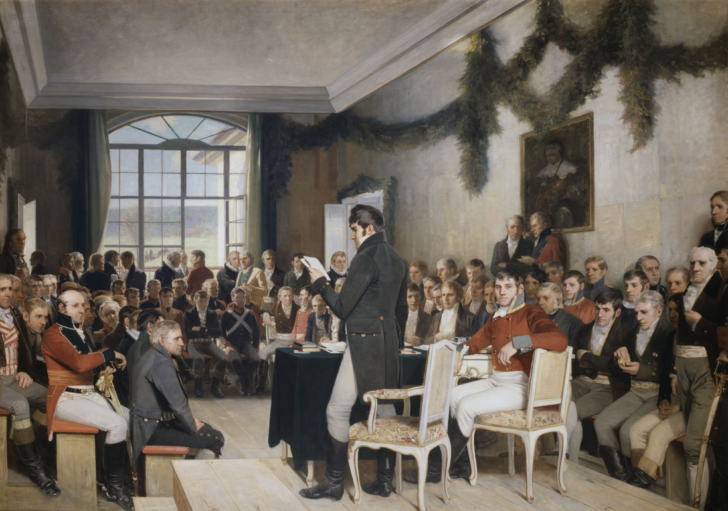
Farmers opposed the civil servants, and many believed that banks, grain stores and roads were more important for building an independent nation. Midelfart believed that the priests could receive appropriate compensation for the loss of their property. The majority agreed on Section 116, which prevented the state from using the capital for various purposes:
Both the purchase sums and the income from the property beneficed to the clergy shall be used solely for the benefit of the clergy and the advancement of education. At the beginning of the nineteenth century, large parts of the “Beneficed Estate” were sold, and the proceeds placed in the Foundation for Church Endowments, which was established by law in 1821. The returns from the foundation were to be divided as follows:
- 1/3 to the new Norwegian university
- 2/3 to the Education Support Fund
The Education Support Fund was intended to improve the salaries of priests and teachers, provide pensions for priests, university and school teachers, and support educational purposes such as public teacher-training colleges.
On 12 January 2023, the Storting repealed the first sentence of Section 116 of the Constitution, meaning that the constitutional protection of the Foundation for Church Endowments and its constitutionally anchored purpose no longer apply.
Funds from the Foundation for Church Endowments created development opportunities for agriculture and education
In the 1820s–1840s, teacher-training colleges were established throughout the country, made possible by funds from the Foundation for Church Endowments. Three of the first colleges were established at vicarages: Holt, Stord and Klæbu. The University of Oslo (UiO) received grants from the foundation right up until 1963.
Through the foundation, farmers gained access to long-term loans at favourable interest rates and with flexible repayment periods. In 1836, the foundation had 2,600 borrowers, and 300 farmers received loans through the foundation that year. This proved useful, as many people needed loans during the agricultural reform the country was undergoing. Like many of our
The role of the vicarage
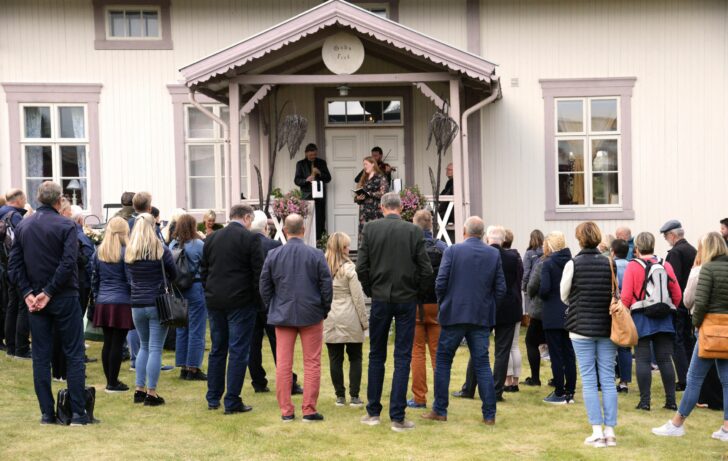
The priest was often at the forefront as a disseminator of news about potatoes, new varieties of fruit, gardening and agriculture. The vicarage was a place where news was shared and, for many, a window onto the world beyond the village. Many priests’ wives spearheaded missionary associations in their own living rooms, inspired by Gustava Kielland at Lyngdal vicarage. The priest had major public administrative responsibilities, such as matters concerning schools, healthcare and poor relief, and as a civil servant played a central role in the development of the local community, as well as nationally.
Vicarage land contributed to town-centre development
When the public sector needed land, it was easier to contact the Ministry of Church Affairs, where the foundation was organised, than to find a private owner willing to make land available for school construction, sports facilities, nursing homes or municipal buildings. The village of Selje is a place where the development of the town centre has taken place extensively on the land belonging to Selje vicarage.
The residence obligation
No official residence arrangement has been more firmly rooted in history than the residence obligation for priests. It was mentioned in the earliest Christian laws and elaborated on in Christian V’s Norwegian Code of 1687. It was abolished in 2015. In 2023, responsibility for providing recruitment housing became the responsibility of the church.
Responsibility for cultural heritage
The foundation’s rehabilitation of priests’ residences and associated buildings has been a formidable investment in the built and cultural heritage. Maintaining and raising housing standards while also complying with preservation orders is time-consuming and costly.
The way forward
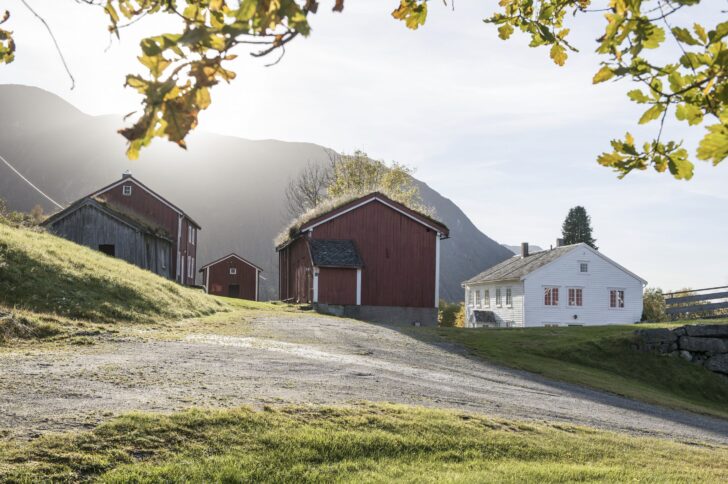
For many decades, ownership of the vicarage estate was disputed. But a long chapter in Norwegian history came to an end when, following the parliamentary white paper on the Foundation for Church Endowments, the government decided that the foundation’s assets should be divided between the Church of Norway and the state. It was subsequently decided that the state-owned part of the foundation would be converted into a limited company, and the new company was named Allstad (a Nynorsk word meaning “everywhere”) and established in September 2024. Allstad will continue to have around one hundred vicarages in its portfolio and, as part of its strategy, will work to find new and socially beneficial uses for them, as well as sell some of the priests’ residences on the open market.