
Our Parsonages
Allstad manages the history of parsonages and has around 140 parsonages and 600 small and large buildings associated with vicarages and parsonages throughout the country. Some are protected farm complexes, while others are homes in more recently developed residential areas. Here you can read more about them.
Inland
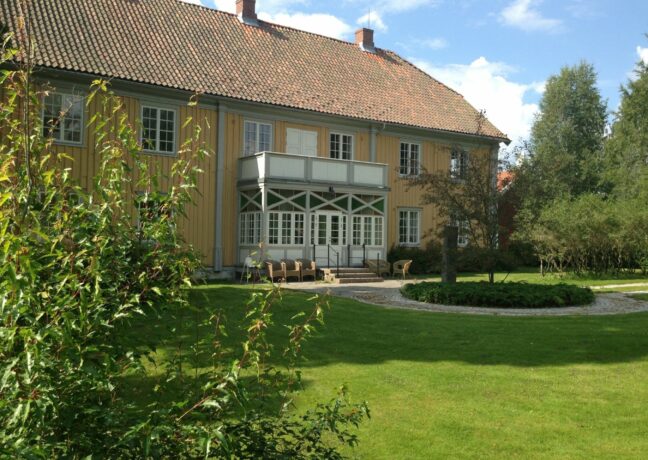
South Odal Parsonage, Strøm
South Odal Parsonage is commonly called Strøm Parsonage. It is situated right by the Glomma River, with Strøm Church as its closest neighbour. Parish priest Erik Christopher Rynning, who was parish priest in South Odal for 60 years, was the builder of both the church and the parsonage. The church's architect was Heinrich Ernst Schirmer. In former times, the connection between the parsonage, dating from 1818, the tenant farm and the church was strong. Today, the three form an important cultural heritage site.
Read more about South Odal Parsonage, Strøm
Inland
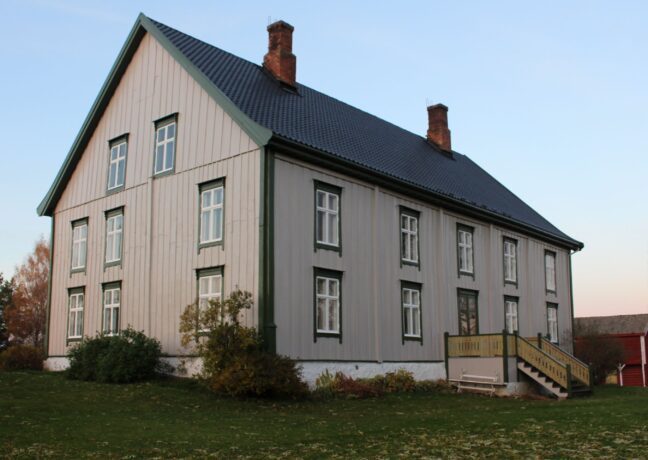
Stange Vicarage, Ottestad
Stange Vicarage in Hedmark lies directly opposite Stange Church, dating from 1250. The vicarage has two listed buildings: a main residence and a storehouse. The main residence is a two-storey log timber building in the civil servant style, and it is believed to have been built by parish priest Poul Wisnæs in the 1760s. The building has a central hallway and a Swiss-style entrance. In 1970–80, the house was restored and its interior upgraded. The storehouse in the courtyard is a rare sight nowadays and was probably built in the 18th century. It has a projecting upper storey, three doors facing the courtyard, and a belfry on the roof ridge.
Read more about Stange Vicarage, Ottestad
Nordland
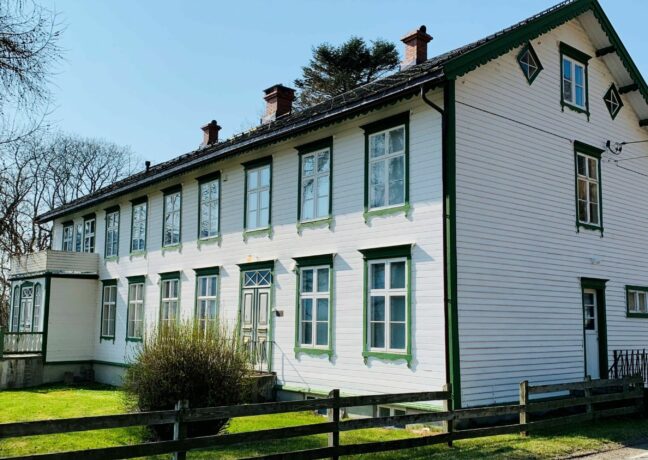
Steigen Vicarage
The vicarage is located at Laskestad in Steigen Municipality, approximately two kilometres from Steigen Church. The monumental main building was erected around 1884. Parish priest Wisløff commissioned its construction. He also established a kitchen garden that became historically significant and had a ripple effect on the spread of garden culture and agriculture in Northern Norway. In 2023, Steigen Rural Museum received the Garden Society’s Garden Culture Award for its work preserving the old garden area.
Read more about Steigen Vicarage
Trøndelag
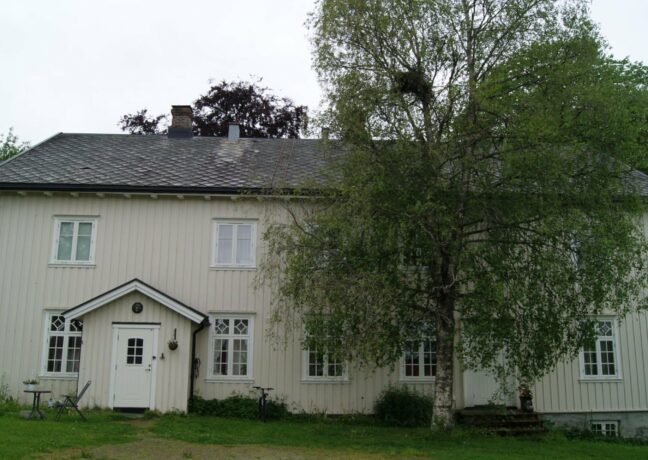
Stod Vicarage, Forr
Stod Vicarage is located in Steinkjer municipality in Nord-Trøndelag. The vicarage was formerly located in the old Stod municipality and was called Forr Vicarage.
Read more about Stod Vicarage, Forr
Vestfold
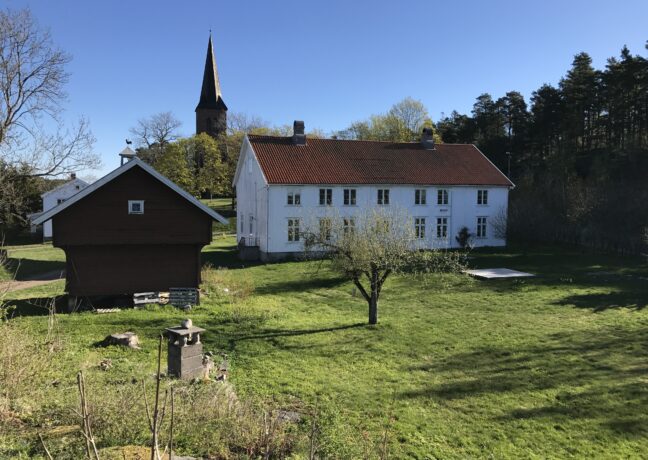
Stokke Vicarage
Stokke vicarage in Vestfold lies just south of Stokke Church. The farm is the church’s closest neighbour, but a road separates and divides the relationship that the church and vicarage have shared since time immemorial.
Read more about Stokke Vicarage
Rogaland
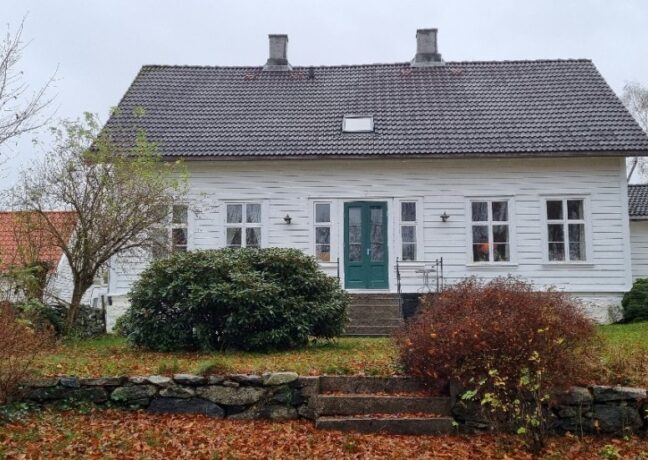
Strand parsonage, Tau
In Strand Municipality lies the urban settlement of Tau, where Strand parsonage was built in 1866. The house has been upgraded whenever a new priest took office and has more recently been extended with additions to the kitchen and basement entrance.
Read more about Strand parsonage, Tau
Vestland
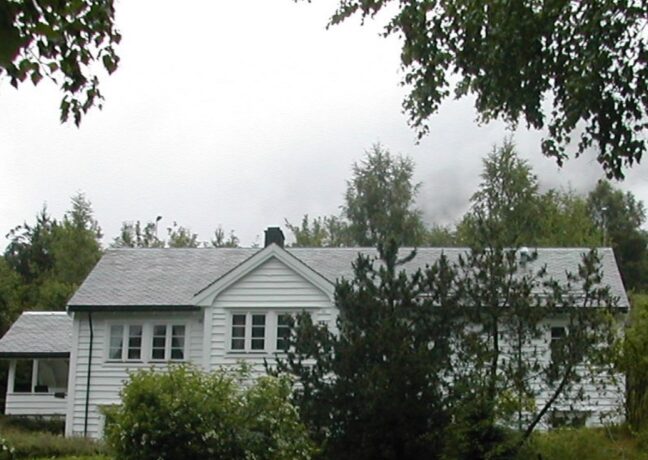
Stryn New Parsonage
Stryn New Parsonage was completed in 1982 and designed by architect Eivind Eriksen. The residence has a floor area of 201 m2 and is located in a residential area on the hillside above Stryn. The building has a timber frame, a gable roof and horizontal cladding. The architect gave the residence a character influenced by the building tradition of Western Norway.
Read more about Stryn New Parsonage
Vestland
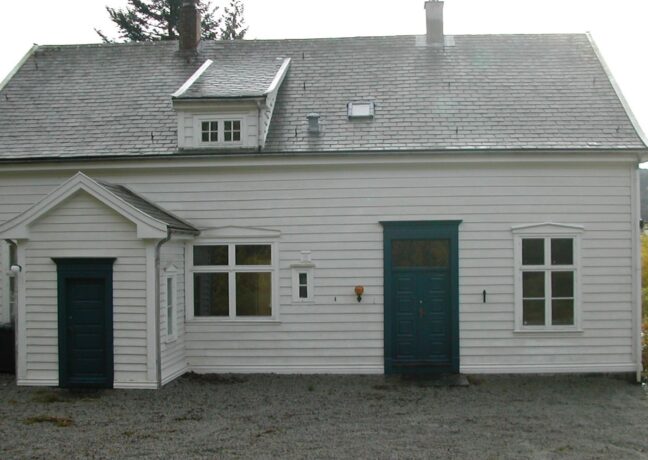
Sveio vicarage
Sveio vicarage is a detached house built in the mid-19th century. The residence has three floors and has been renovated several times by the organisation. The fact that the vicarage has deep roots reaching back to another era is evident from the fact that traces of settlement from the Late Stone Age have been found at Nedrebøen, below the farmyard at the vicarage. Among other things, an axe of the Vespestad type has been found, and test probes show that the site has been intensively cultivated. The residence is located just across the road from Førde Church. It is built of masonry, was erected in 1938 and designed by Torgeir Alvsaker.
Read more about Sveio vicarage
Buskerud
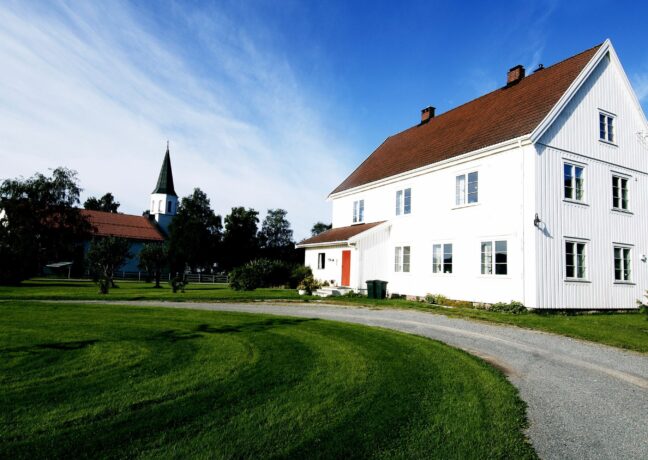
Sylling Parsonage
The parsonage was built in 1918 and has an extension from 1964. It has a veranda and two floors, with a total living area of 170 m2. The building is characterized by a traditional architectural style with roots dating back to the 19th century. The building underwent extensive renovation in the 1990s and forms the main building on a farmstead. The farmstead gives a unified impression, with the parsonage and tenant farmer’s residence situated around the same courtyard.
Read more about Sylling Parsonage
Vestfold
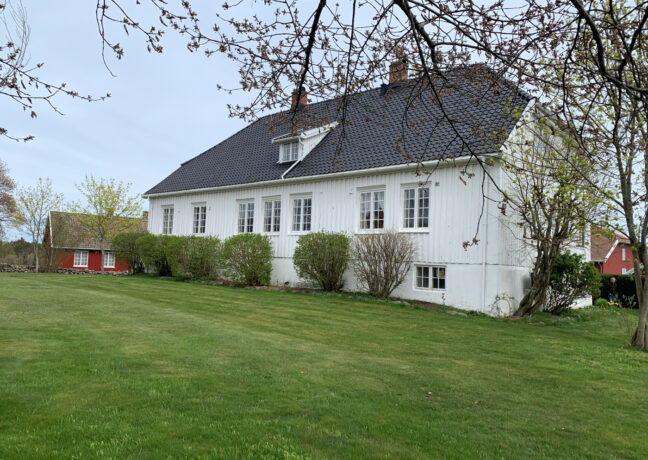
Tjølling Parsonage
Tjølling Parsonage in Vestfold is part of a protected complex consisting of a main building, a borgstue, an agricultural building and a carriage shed. The farm is located right next to Tjølling Church, which was built in 1150.
Read more about Tjølling Parsonage
Agder
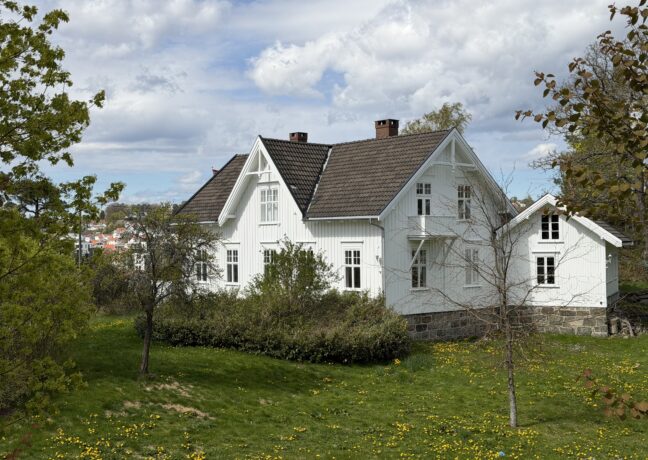
Tromøy Vicarage
Tromøy Vicarage was built according to the designs of agricultural engineer Bretteville from 1908, and the house was completed in 1912. Bretteville designed several vicarages in southeastern Norway. The houses were modest, but characterised by elegant and functional elements typical of the Swiss style. Tromøy Vicarage is an example of his work.
Read more about Tromøy Vicarage
Troms
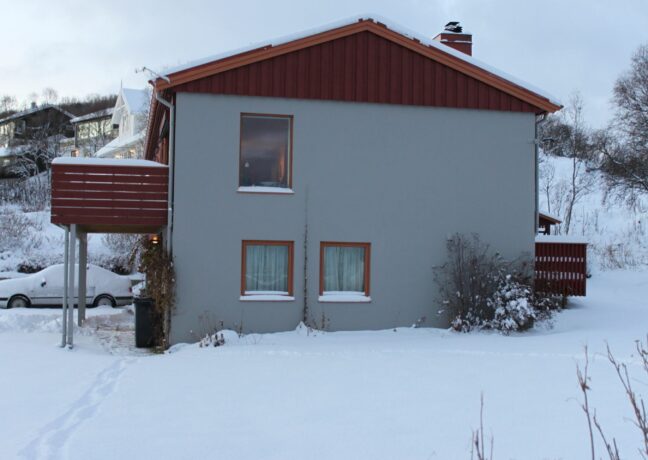
Trondenes Parsonage
The new parsonage replaced the use of the old Trondenes parsonage, which was closer to the church.
Read more about Trondenes Parsonage